


How does CNC machining ensure smooth, rounded edges and corners on automotive product parts?
Release Time : 2026-01-09
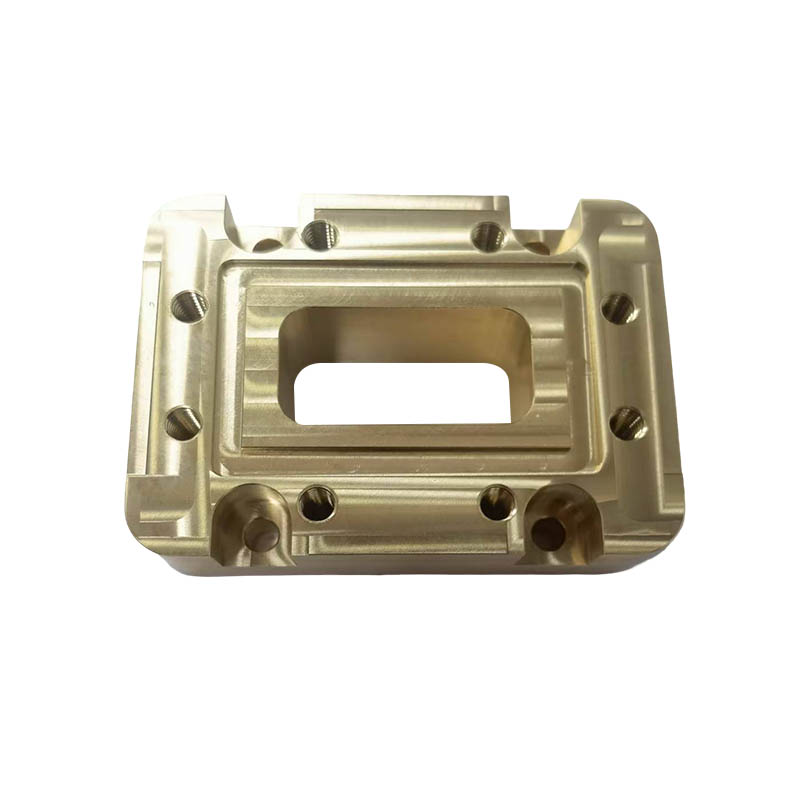
In modern automotive manufacturing, automotive product parts not only need to meet stringent structural and functional requirements, but also need to consider safety, aesthetics, and compatibility with subsequent surface treatments. Among these, "smooth, rounded edges and corners" has become a key design and process standard—it prevents injuries during assembly or use, improves coating adhesion, reduces stress concentration, and provides a uniform substrate for surface treatments such as spraying, electrophoresis, and anodizing, thus ensuring consistent color, corrosion resistance, and successful completion of various salt spray tests. This seemingly minor requirement is efficiently and stably achieved through the deep integration of high-precision CNC machining technology and intelligent process strategies.
1. Integrated CAD/CAM Design: Defining Safe Rounded Corners from the Source
The achievement of rounded edges begins in the design phase. Engineers set clear fillet or chamfer parameters for all exposed corners during 3D modeling, with specific values determined based on part function, material properties, and human-machine safety regulations. Subsequently, CAM software automatically converts these geometric features into toolpath instructions. Advanced CAM systems can intelligently identify "sharp edge risk areas," automatically adding deburring or finishing processes during the programming phase. This ensures that even at complex surface intersections, burrs are completely removed, creating a smooth transition and eliminating sharp corner residues caused by design oversights.
2. Specialized Tools and Multi-Axis Linkage: Precisely Executing Rounded Corner Forming
CNC machining centers use ball end mills, round nose end mills, or custom-designed forming tools to directly create rounded edges in a single cutting process. For intersecting corners within automotive products, small-diameter ball end mills are used for deburring and finishing. In five-axis linkage machining, the tool posture can be adjusted in real time, always maintaining the optimal angle to the workpiece surface, avoiding "incomplete cuts" caused by tool interference in traditional three-axis machining. This "tool-based" approach is not only highly efficient but also achieves dimensional consistency far exceeding manual deburring, truly realizing "machined as finished product."
3. Optimized Process Parameters: Balancing Material Properties and Surface Integrity
Common materials used in automotive products include aluminum alloys, engineering plastics, and low-carbon steel, all emphasizing environmental friendliness and stability. For different materials, the CNC system dynamically adjusts the spindle speed, feed rate, depth of cut, and cooling method. For example, when machining aluminum alloys, high speed, low feed rate, and minimal lubrication are used to reduce thermal deformation and tearing; when machining engineering plastics, overheating and melting are avoided to ensure that edges do not curl or discolor. Simultaneously, the final finishing process employs a "climb milling + small step distance" strategy, directing the cutting force towards the machined surface, effectively suppressing burr formation and achieving a mirror-like transition area with a Ra of less than 0.8μm, providing an ideal substrate for subsequent spraying or electrophoresis.
4. Automated Deburring and Online Inspection: Closed-Loop Quality Assurance
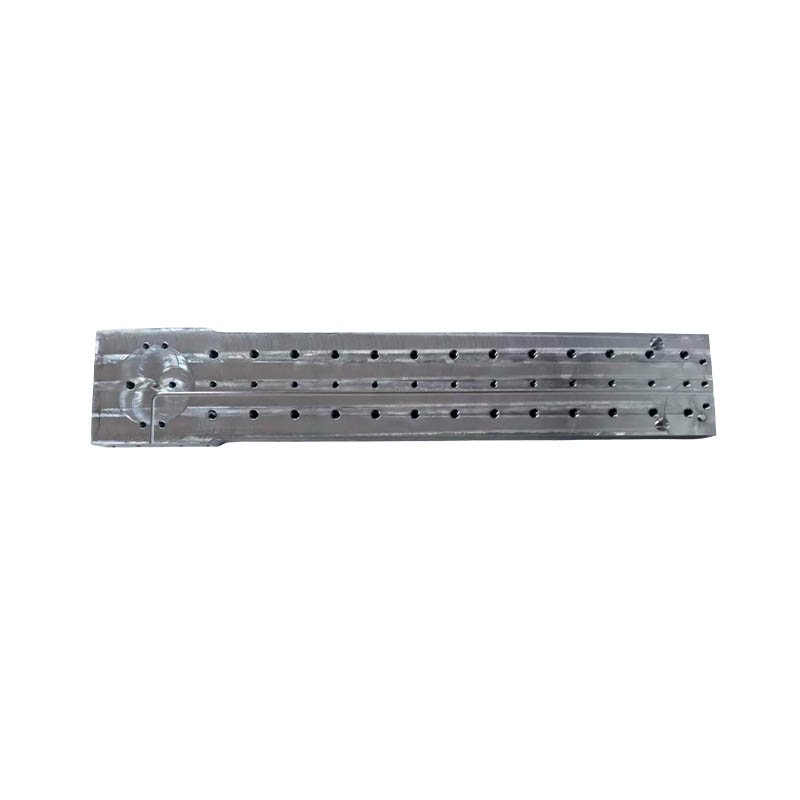
Even with highly optimized processes, some tiny burrs may still occur at hole openings or thin walls. Therefore, high-end production lines integrate robot-assisted deburring units or high-pressure water jet/thermal deburring equipment as an extension of CNC machining, ensuring 100% sharp edge-free edges. Simultaneously, 3D vision or contact probes are used for online edge inspection, automatically comparing the fillet radius to ensure it meets tolerances, and immediately rejecting defective products. This integrated process of "machining-deburring-inspection" makes rounded, sharp-edged edges a quantifiable and traceable quality indicator, rather than a result dependent on experience-based manual work.
In summary, CNC machining for automotive products systematically solves the challenge of rounded edges on automotive parts through four pillars: forward-thinking design, intelligent toolpaths, material-adaptive processes, and automated quality control. This not only enhances product safety and aesthetics but also lays a solid foundation for diverse subsequent surface treatments, ultimately helping products stand out in rigorous salt spray tests and market scrutiny—demonstrating manufacturing excellence in the smallest details.
1. Integrated CAD/CAM Design: Defining Safe Rounded Corners from the Source
The achievement of rounded edges begins in the design phase. Engineers set clear fillet or chamfer parameters for all exposed corners during 3D modeling, with specific values determined based on part function, material properties, and human-machine safety regulations. Subsequently, CAM software automatically converts these geometric features into toolpath instructions. Advanced CAM systems can intelligently identify "sharp edge risk areas," automatically adding deburring or finishing processes during the programming phase. This ensures that even at complex surface intersections, burrs are completely removed, creating a smooth transition and eliminating sharp corner residues caused by design oversights.
2. Specialized Tools and Multi-Axis Linkage: Precisely Executing Rounded Corner Forming
CNC machining centers use ball end mills, round nose end mills, or custom-designed forming tools to directly create rounded edges in a single cutting process. For intersecting corners within automotive products, small-diameter ball end mills are used for deburring and finishing. In five-axis linkage machining, the tool posture can be adjusted in real time, always maintaining the optimal angle to the workpiece surface, avoiding "incomplete cuts" caused by tool interference in traditional three-axis machining. This "tool-based" approach is not only highly efficient but also achieves dimensional consistency far exceeding manual deburring, truly realizing "machined as finished product."
3. Optimized Process Parameters: Balancing Material Properties and Surface Integrity
Common materials used in automotive products include aluminum alloys, engineering plastics, and low-carbon steel, all emphasizing environmental friendliness and stability. For different materials, the CNC system dynamically adjusts the spindle speed, feed rate, depth of cut, and cooling method. For example, when machining aluminum alloys, high speed, low feed rate, and minimal lubrication are used to reduce thermal deformation and tearing; when machining engineering plastics, overheating and melting are avoided to ensure that edges do not curl or discolor. Simultaneously, the final finishing process employs a "climb milling + small step distance" strategy, directing the cutting force towards the machined surface, effectively suppressing burr formation and achieving a mirror-like transition area with a Ra of less than 0.8μm, providing an ideal substrate for subsequent spraying or electrophoresis.
4. Automated Deburring and Online Inspection: Closed-Loop Quality Assurance
Even with highly optimized processes, some tiny burrs may still occur at hole openings or thin walls. Therefore, high-end production lines integrate robot-assisted deburring units or high-pressure water jet/thermal deburring equipment as an extension of CNC machining, ensuring 100% sharp edge-free edges. Simultaneously, 3D vision or contact probes are used for online edge inspection, automatically comparing the fillet radius to ensure it meets tolerances, and immediately rejecting defective products. This integrated process of "machining-deburring-inspection" makes rounded, sharp-edged edges a quantifiable and traceable quality indicator, rather than a result dependent on experience-based manual work.
In summary, CNC machining for automotive products systematically solves the challenge of rounded edges on automotive parts through four pillars: forward-thinking design, intelligent toolpaths, material-adaptive processes, and automated quality control. This not only enhances product safety and aesthetics but also lays a solid foundation for diverse subsequent surface treatments, ultimately helping products stand out in rigorous salt spray tests and market scrutiny—demonstrating manufacturing excellence in the smallest details.