


How can the assembly accuracy of each component be guaranteed when machining microwave products using CNC machining?
Release Time : 2025-12-26
In the CNC machining of microwave products, ensuring the assembly accuracy of each component is crucial for stable product performance and reliable operation. Assembly accuracy not only affects the heating efficiency and uniformity of microwave products but also directly relates to their lifespan and safety. Therefore, multi-dimensional optimization is needed, encompassing equipment selection, process control, testing methods, assembly procedures, and environmental management, to achieve high-precision assembly.
High-precision CNC machining equipment is the fundamental guarantee of assembly accuracy. The guideway accuracy, spindle system rigidity, and clearance control of transmission components in CNC machine tools directly affect the dimensional stability of the parts. For example, CNC machine tools using high-precision ball screws and hydrostatic guideways can reduce transmission errors; while servo motors equipped with closed-loop control systems can correct positional deviations in real time, ensuring the consistency of part dimensions. Furthermore, the interpolation algorithm and error compensation function of the CNC system can further reduce geometric errors during machining, providing reliable base parts for subsequent assembly.
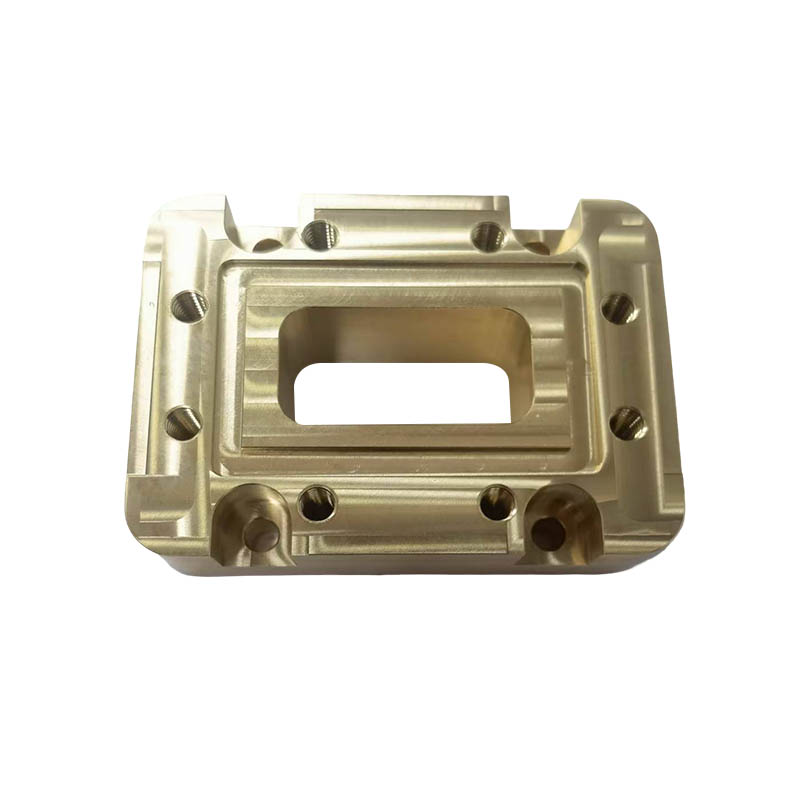
Strict process flow control is the core of assembly accuracy. During the CNC machining stage, cutting parameters and tool paths must be optimized based on the material properties and structural characteristics of the parts. For example, for thin-walled parts such as microwave product cavities, a machining strategy of small depth of cut and high feed rate can reduce deformation caused by vibration. For critical components such as magnetron mounting bases, CNC programming is required to control the tool path and ensure that hole position accuracy and surface roughness meet design requirements. During the assembly phase, standardized work instructions must be developed, clearly defining the assembly sequence, tightening torque, and cleaning requirements for each component to avoid cumulative errors caused by improper operation.
Advanced inspection methods are crucial for verifying assembly accuracy. During CNC machining, high-precision inspection equipment such as coordinate measuring machines (CMMs) and laser interferometers are used to perform full or random inspections of critical dimensions. For example, scanning the flatness and perpendicularity of microwave product cavities with a CMM can promptly detect machining deviations; while laser interferometers can be used to calibrate the coordinate axis positioning accuracy of CNC machine tools, ensuring the accuracy of part dimensions. After assembly, functional tests are also required, such as checking the sealing of door switches and microwave leakage, to ensure that assembly accuracy meets safety standards.
Choosing appropriate assembly methods is an effective way to improve accuracy. For microwave products, interchangeable assembly is suitable for mass production, achieving assembly precision without adjustment through strict control of part tolerances. Adjustment assembly, on the other hand, is suitable for single-piece or small-batch production, using shims, screws, and other adjusting components to compensate for machining errors. For example, when assembling a microwave product door, the hinge installation position can be adjusted to ensure uniform gaps between the door and the cavity; while when installing a magnetron, the screws of the fixing bracket must be adjusted to ensure its coaxiality with the waveguide.
Controlling the assembly environment is equally crucial. Environmental factors such as temperature, humidity, and cleanliness directly affect the dimensional stability of parts and assembly quality. For example, high temperatures may cause thermal expansion of metal parts, leading to changes in assembly gaps; while dust or oil may contaminate contact surfaces, reducing assembly precision. Therefore, assembly operations must be carried out in a temperature-controlled workshop equipped with an air purification system to ensure environmental parameters meet process requirements. Furthermore, assembly tools must be calibrated regularly to avoid errors caused by tool wear.
Personnel skills and teamwork are the soft guarantees of assembly precision. Operators must undergo professional training, be familiar with the operating procedures and assembly process requirements of CNC machining equipment, and be proficient in using testing tools for quality verification. Simultaneously, a cross-departmental collaboration mechanism must be established to ensure smooth information flow across design, machining, and assembly stages, and to promptly resolve problems arising during assembly. For example, if a part's machining error exceeds tolerance, it must be quickly reported to the machining department for adjustment to prevent the problem from escalating to subsequent processes.
Ensuring the assembly accuracy of CNC-machined microwave products requires a comprehensive approach throughout the entire process, including design, machining, testing, assembly, and environmental management. By selecting high-precision equipment, optimizing process flows, strengthening testing methods, choosing appropriate assembly methods, controlling environmental parameters, and improving personnel skills, assembly accuracy can be significantly improved, ensuring stable and reliable product performance and meeting market demands for high-quality microwave products.